I find South Korea a fascinating country. One of the economic miracles of the second half of the 20th century, South Korea not only went from extremely poor in the 1950s, when it suffered the invasion of North Korea and the subsequent war, to sitting among high-income countries nowadays, but also became a cultural powerhouse, dominating the music and film scene in the region. Yet South Korea is ending: its fertility rate is the lowest in the world, and absent any radical changes, population will shrink from around 52 million today to somewhere around 20 million by the end of the century.
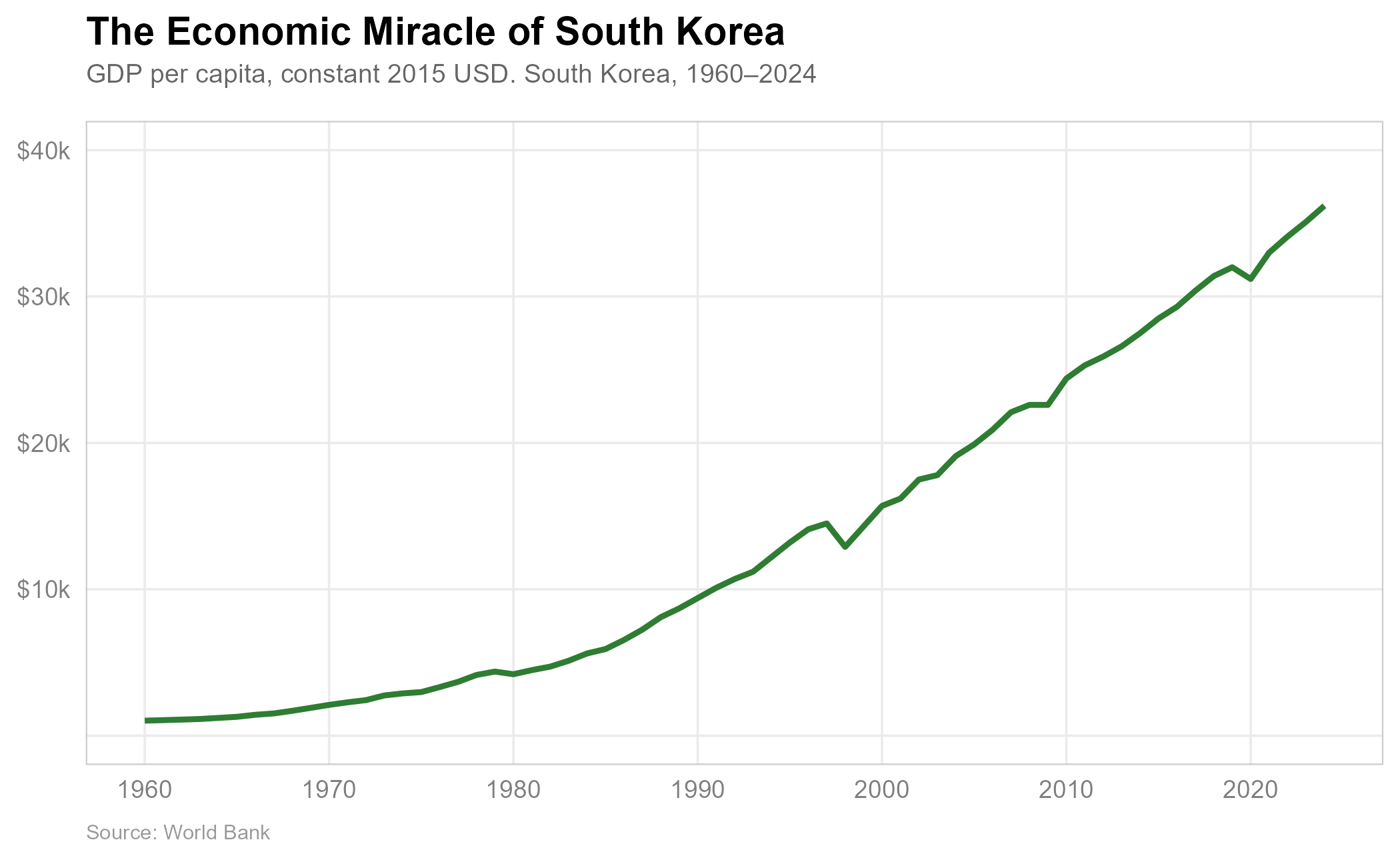
The economic story is staggering. In 1960, South Korea’s GDP per capital was just over $1,000 in today’s prices, among the poorest countries in the world, behind much of sub-Saharan Africa. By 2024, it stood at over $37,000: a 36-fold increase in 64 years or, put differently, a 5.75% annual growth on average for the whole period. An authentic economic miracle.
But there is more. 한류 (Hallyu), or “Korean Wave”, refers to the global popularity gained by Korean pop culture, from videogames, to cinema, music, products, and more. This started taking off during the 2000s, first to close-by regions, such as Japan and China, and then globally in the 2010s. Shows such as Squid Games, movies such as Parasite, and K-Pop bands such as BTS and Blackpink have attracted cult followings all around the world. South Korea has a prestige and attention way beyond the size of its economy.
So why is it ending?
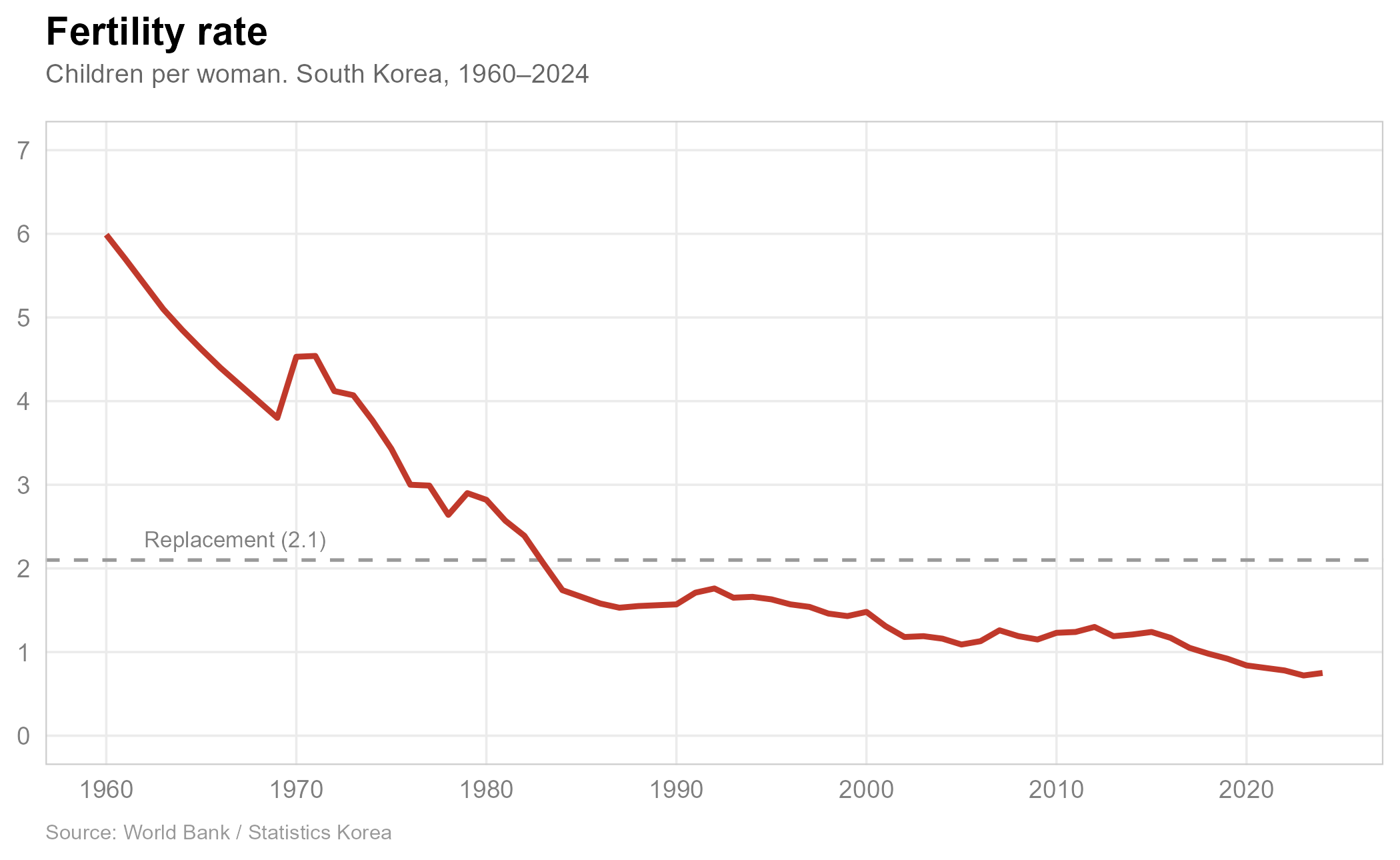
Demographers say that a society needs a fertility rate of at least 2.1 (children per woman) to maintain a stable population without immigration. South Korea crossed below that threshold in 1983 (before I was born!) and never came back. By 2023, the rate reached 0.72, the lowest ever recorded for any country (with the exception, I hope, of the Vatican). It rose slightly in the following year but nothing to prevent the overall trend: from 6 children per woman in 1960 to 0.75 in 2024. While most countries around the world are experiencing declining fertility rates, the South Korean evolution beats everyone else.
The consequences are as clear as basically inevitable. The population of South Korea will continue declining and this decline will accelerate in the second half of this century, finally halving as we approach 2100. An unprecedented level of immigration could help slow down the fall, but this would need to be truly a massive program and it would probably only push the fall towards the 22nd century. The same is true for any pro-natalist policies: some have already been tried by the South Korean government, with marginal effectiveness given the figure above. Any intervention that can move the needle on the population projections would need to be massive in scale. And it would only move the needle slightly.
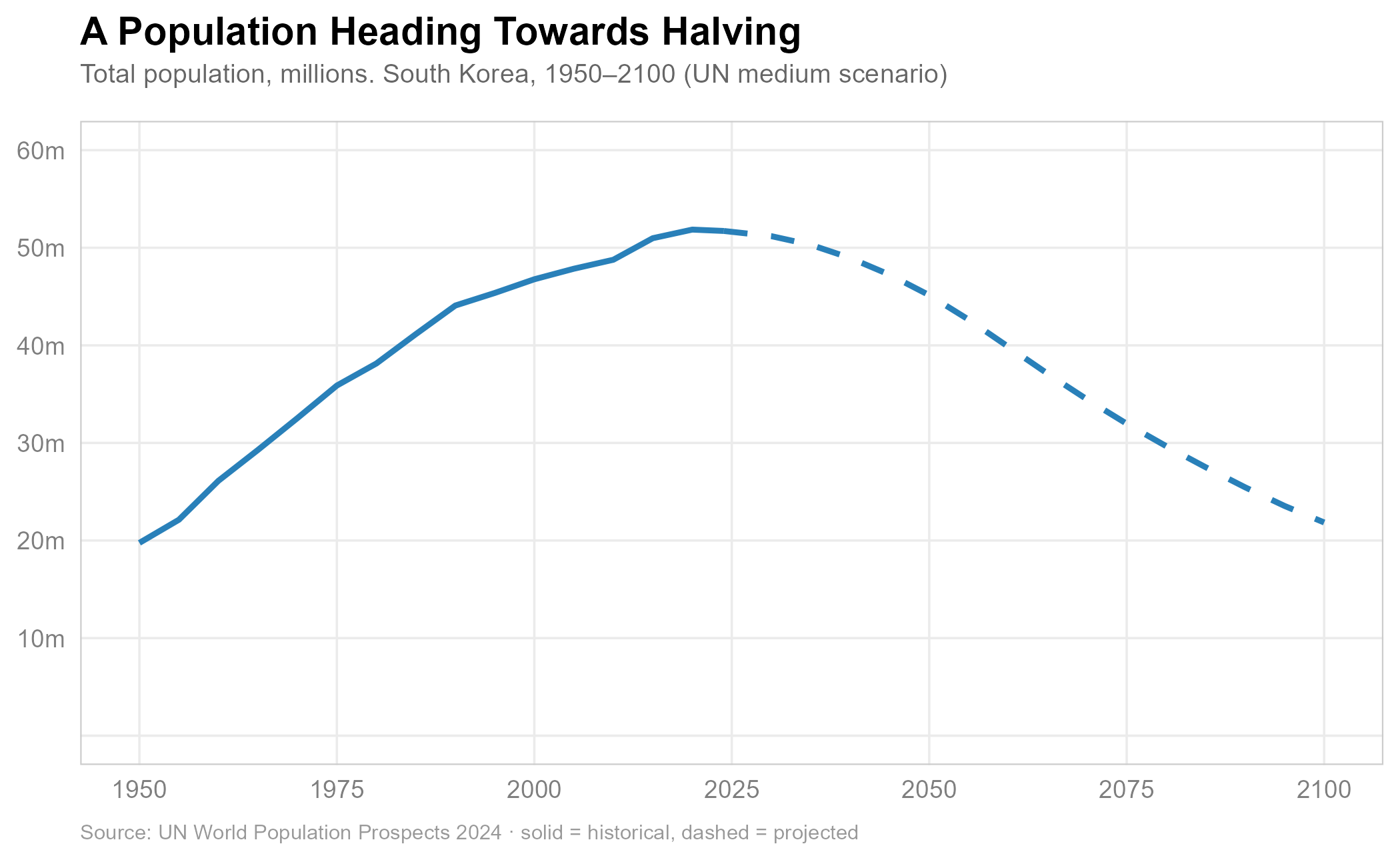
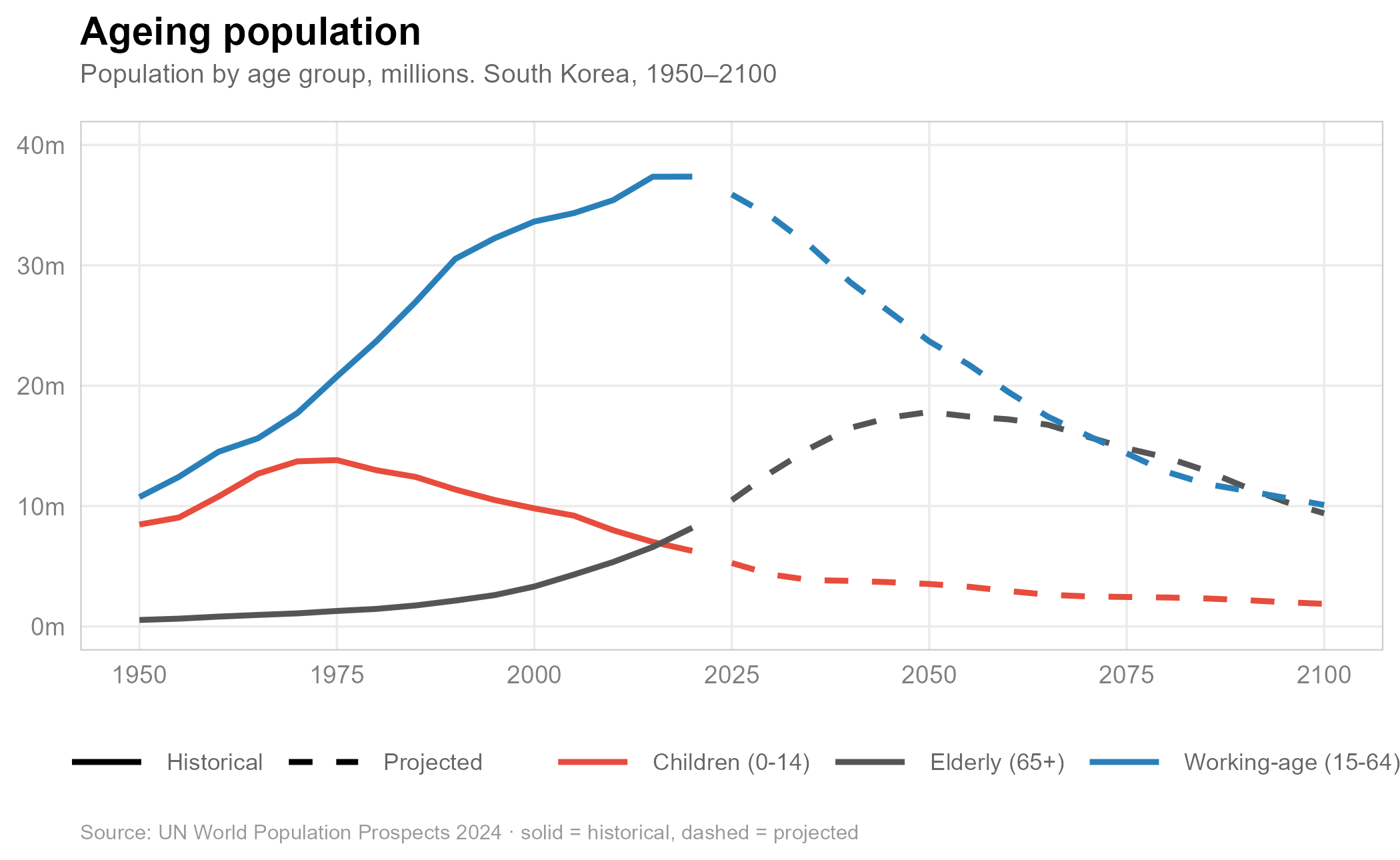
What is the problem of halving population, if it was at a similar point in the 1950? Couldn’t it simply start growing again and follow the same cycle? Unfortunately, there is a crucial difference: the age composition of the population. The median age in 1950 was under 20 years: as the figure below shows, there were almost as many children as working-age people. This will not be the situation in 2100: around half the population in South Korea will be above 60 years old and the “elderly” (65 and above) will be as many as the working age population by the end of this century. This is older than any country in the world today (except, again, probably the Vatican). Not what we would describe as a dynamic fast-growing society.
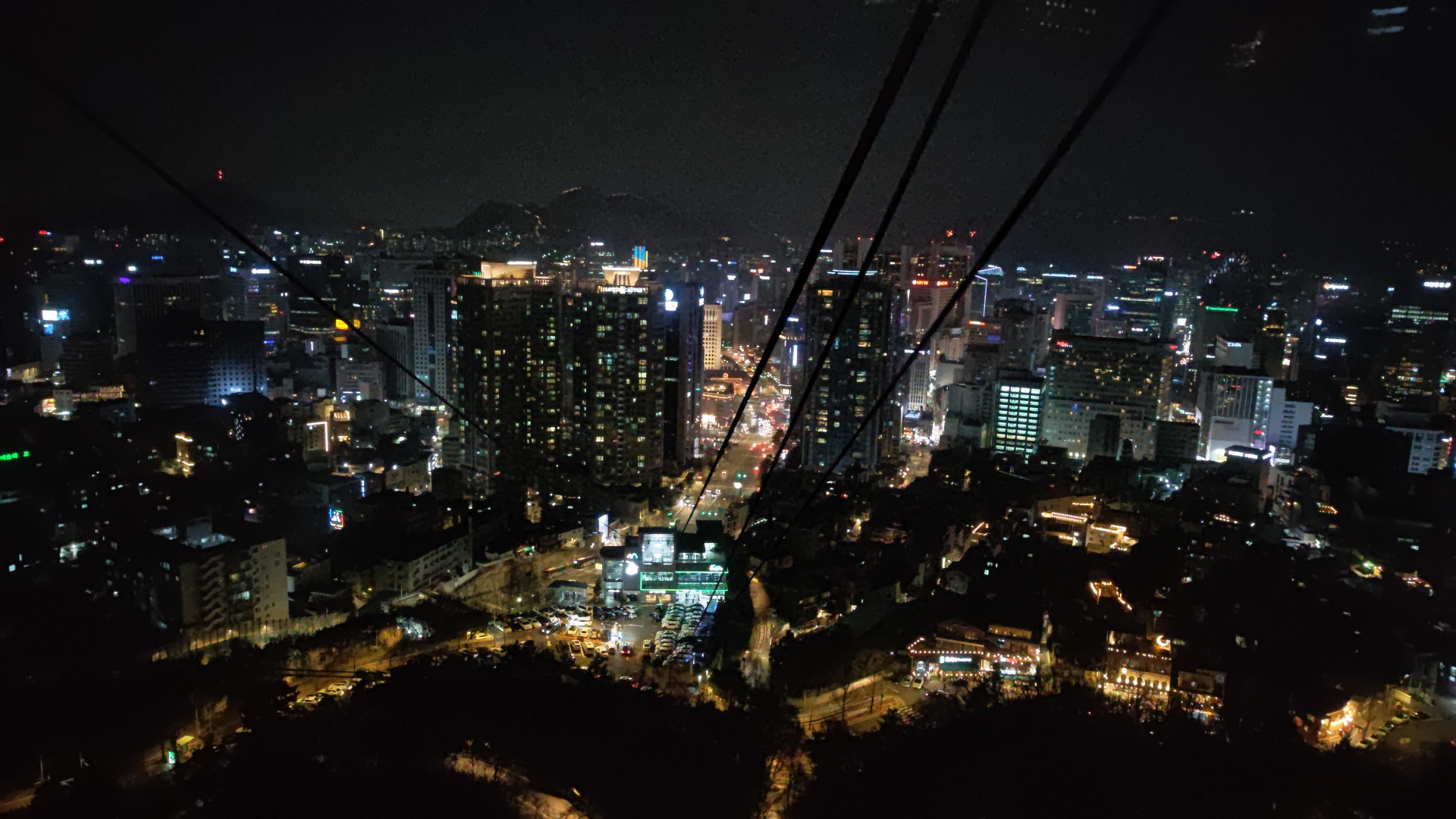
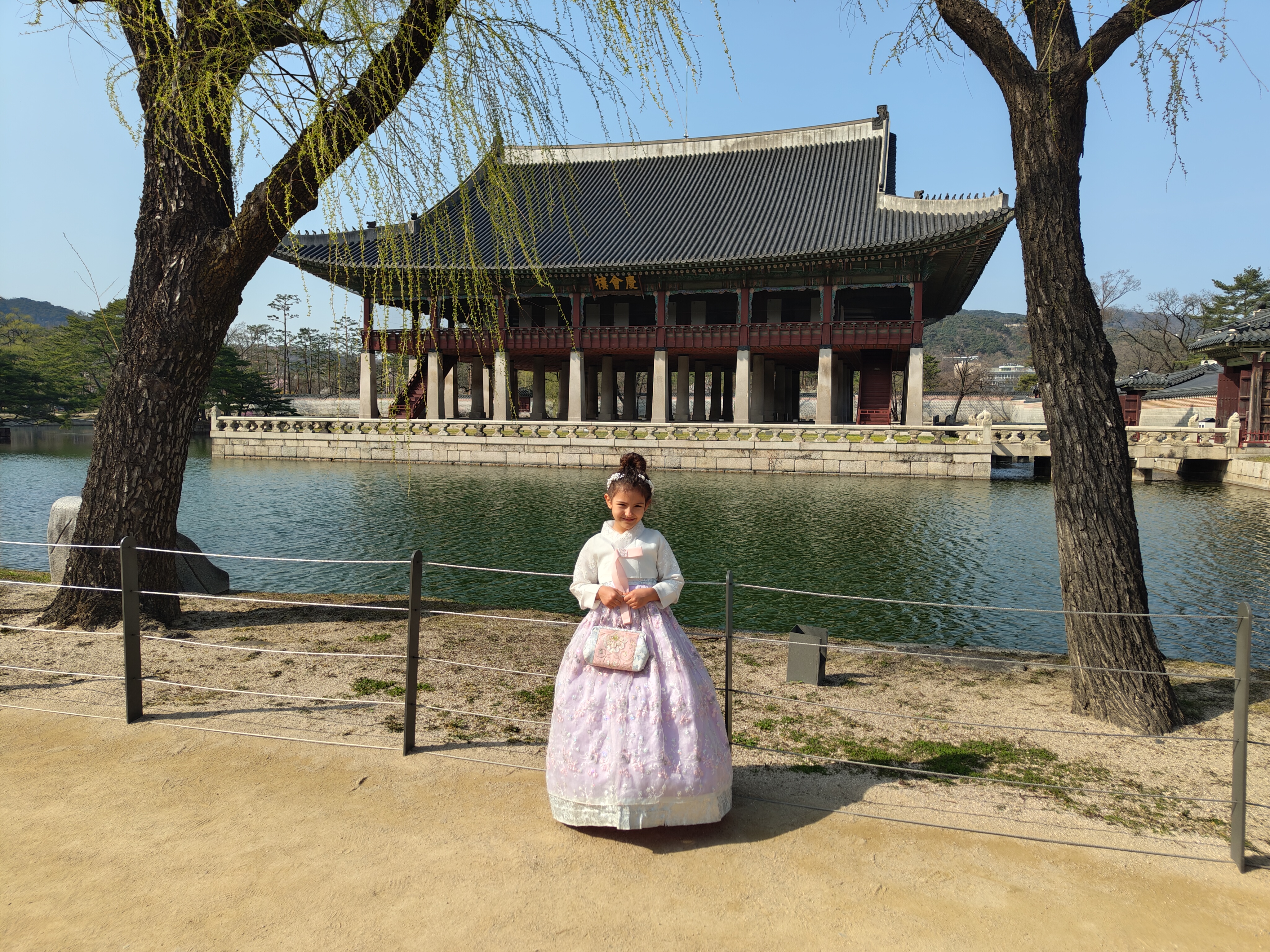
What does this all mean? South Korea is the most extreme example of a problem that is happening in most, if not all, richer countries: younger generations are deciding not to have children. Exactly why is the subject of academic as well as political and popular debate. I have absolutely nothing to bring to this discussion. This post is just to explain why South Korea is at its absolute peak right now and will most likely never be as influential as it is today. It is a wonderful country to visit; I did so a couple of years ago (see some pictures below!) and hope to do it again soon.